
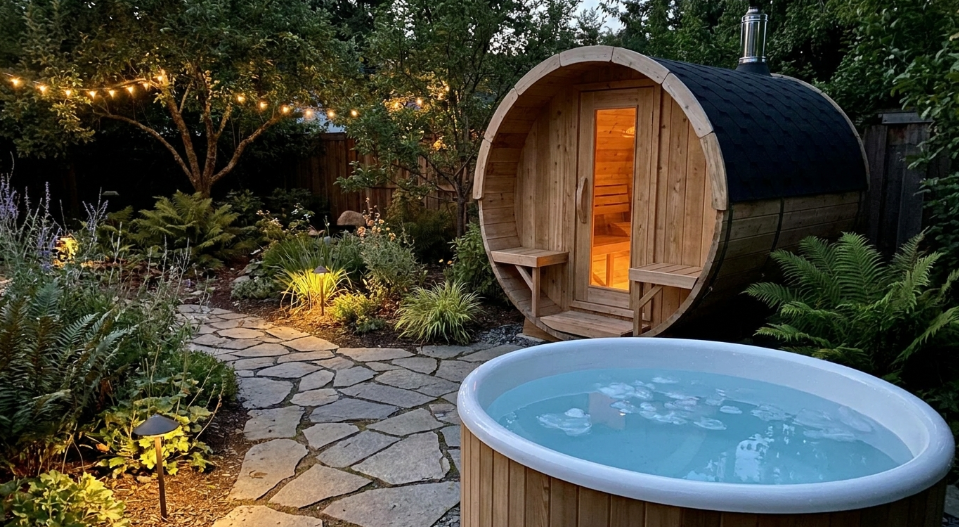
A home sauna built and maintained correctly runs fine through a genuinely cold winter, and many owners in cold-weather regions actually use theirs more between December and March than in warmer months. The adjustments that matter are practical rather than dramatic: extra warm-up time, a cleared and de-iced path to the door, attention to condensation inside the walls, and a plan for the hot-to-cold transition that fits the household’s tolerance and any health considerations. None of it requires a different sauna, just a different seasonal routine around the one already in the yard.
1. Give the Heater Extra Warm-Up Time
A cabin that reaches full temperature in 15 to 20 minutes on a mild fall evening can take meaningfully longer once outdoor air sits well below freezing, simply because the heater is fighting a bigger gap between ambient and target temperature. Building an extra ten to fifteen minutes into the pre-session routine, or starting the heater before finishing dinner rather than right before stepping outside, keeps the first few minutes of a winter session from being spent waiting rather than sweating.
2. Clear and De-Ice the Path to the Door Every Session
The walk from the back door to the cabin door is where most winter sauna injuries actually happen, not inside the heat itself. A short stretch of packed snow or black ice between two doors, crossed barefoot or in sandals in the dark, is a genuinely common way people get hurt around a home sauna in January. Keeping that path shoveled and salted, or laying down a rubber mat that stays gripped even when wet, takes a few minutes and removes the riskiest part of a cold-weather session.
3. Watch for Condensation Building Up Inside the Walls
The bigger the gap between a heated interior and a freezing exterior wall, the more moisture tends to migrate and condense inside the wall cavity if the cabin was not built with a proper vapor barrier. Left unchecked over several winters, that trapped moisture leads to wood rot that stays invisible from either side of the wall until it has already spread. A cabin rated for cold-climate use should specify a vapor barrier in its construction; if a listing does not mention one, it is worth asking directly before the first hard freeze rather than after a wall starts to feel soft.
4. Keep Water and Any Plumbed Lines From Freezing
Most home units use a simple bucket and ladle carried out and back with each session, which sidesteps the freezing problem entirely since nothing sits outside between uses. A cabin with a plumbed sink or shower attachment needs that line insulated or drained ahead of the first freeze, since a burst pipe discovered in February is a far more expensive repair than an afternoon spent winterizing it in November.
5. Check the Door Seal Before the Cold Sets In
A worn or gapped door seal is where a disproportionate amount of heat escapes on a cold night, forcing the heater to work harder and longer than it should for the cabin’s actual size. A quick seasonal check, running a hand around the door frame while the heater is on to feel for drafts, catches this before it turns into a heater that never quite reaches temperature on the coldest nights of the year. Replacement gasket material is inexpensive and usually a simple swap for anyone comfortable with basic maintenance.
6. Budget for a Modest, Not Dramatic, Rise in the Electric Bill
A properly insulated cabin with a sound door seal typically sees a modest per-session cost increase in deep cold compared with a mild evening, since the heater is working against a wider temperature gap but is not fighting a losing battle. A cabin with weak insulation or an unsealed door sees a much bigger jump, which is one more reason the maintenance items above pay for themselves over a full winter rather than being optional extras.
7. Protect Exterior Finish From Salt and Ice-Melt Chemicals
Rock salt and other ice-melt products tracked near the base of an outdoor cabin, or splashed up during shoveling, can degrade sealant and wood finish faster than cold weather does on its own. Sweeping salt residue away from the immediate structure after each application, and choosing a calcium-based melt product over rock salt near the sauna specifically, protects a finish that otherwise holds up fine through repeated freeze-thaw cycles.
8. Decide How the Household Will Handle the Hot-to-Cold Transition
Stepping from a heated cabin into freezing air or snow is part of the appeal for a lot of cold-climate owners, and it is a long-standing practice rather than a fringe habit. It is worth deciding as a household how far to take it, whether that means a quick step onto a cleared porch or a full roll in snow, and being honest that anyone managing a cardiovascular condition or who is pregnant should treat sudden temperature swings with real caution rather than following what a more experienced household member does without a second thought. Households finalizing a cold-climate purchase can compare heater sizing and construction details across current models at SweatDecks.com before committing to a specific unit for a winter-heavy routine.
What Does the Research Say About Heat Exposure in Cold Climates?
A review examining the effects of heat and cold on the body, with a specific focus on Finnish sauna bathing, describes cardiovascular associations tied to regular exposure without distinguishing outdoor climate as a variable. A 2018 review in Mayo Clinic Proceedings and a separate systematic review both describe similar cardiovascular associations tied to consistent, regular sauna use generally. None of the available research suggests that a cold climate itself changes the underlying association, which means the seasonal maintenance items above matter mainly for comfort, safety, and keeping the cabin usable enough to maintain a consistent habit through the months a household might otherwise be tempted to skip it.
Frequently Asked Questions
Does a home sauna need extra warm-up time in winter? Yes. A heater that takes 15 to 20 minutes on a mild evening can take noticeably longer against a hard freeze, so build in extra lead time.
Will a home sauna’s electric bill jump a lot in winter? It typically rises modestly in a well-insulated cabin. Weak insulation or a leaky door seal causes a much bigger jump.
Is it safe to walk from a hot sauna into freezing air or snow? For most healthy adults, brief cold exposure afterward is standard practice. Anyone with a cardiovascular condition should be more cautious.
Does winter use damage a home sauna’s exterior finish faster? Not from cold alone, but salt and ice-melt chemicals near the base can degrade finish faster than weather does on its own.
References
- Effects of heat and cold on health, with special reference to Finnish sauna bathing, American Journal of Physiology, 2018
- Cardiovascular and Other Health Benefits of Sauna Bathing: A Review of the Evidence, Mayo Clinic Proceedings, 2018
- Clinical Effects of Regular Dry Sauna Bathing: A Systematic Review, Evidence-Based Complementary and Alternative Medicine, 2018
